
Eight Remaining Founder Opportunities to Secure Oceanfront on Florida’s Space Coast
In most coastal markets, that question no longer has a compelling answer. South Florida, Naples, and Sarasota have already experienced their major pricing cycles. Entry today often means buying into stabilized or fully matured valuation. Florida’s Space Coast, located to the east of Orlando, is one of the few exceptions.
It remains a coastal market where economic expansion is active, measurable, and ongoing, yet real estate pricing has not fully adjusted to reflect that growth.
A Regional Economy That Has Already Shifted
This is not a speculative story about future potential. The shift has already occurred.
The Space Coast has moved from a government-dependent aerospace economy into a privately driven corridor of launch providers, satellite companies, and supporting technology firms. That transition has introduced sustained capital investment and a workforce composed of engineers, executives, and high-income professionals relocating into the region.
According to the Economic Development Commission of Florida’s Space Coast, the region continues to attract significant private investment tied to aerospace, defense, and advanced manufacturing, reinforcing long-term population and employment growth. The organization notes that the Space Coast has evolved into one of the nation’s leading hubs for commercial space activity, with sustained expansion expected across multiple sectors, underscoring the structural nature of the region’s growth.
These are long-term economic drivers. They create durable housing demand, not seasonal spikes. The real estate market typically follows this kind of shift, but not immediately. There is always a lag between economic transformation and pricing response. That lag is where opportunity exists.
Stephanie Dandridge, Director of Sales with Premier Sotheby’s International Realty, frames the shift in practical terms: “We’re seeing a different type of buyer engage with the Space Coast today. Although many are looking to the barrier island to be directly on the sands, many of these individuals who are following job growth, following capital movement, and recognizing that the housing market has not fully caught up yet. That’s where they see opportunity, not in speculation, but in timing.”
Oceanfront Supply That Cannot Be Recreated
Even in growth markets, not all assets are equal. Lumena, a preconstruction oceanfront condominium, is not simply positioned within the Space Coast. It represents a category of product that is increasingly difficult to deliver.
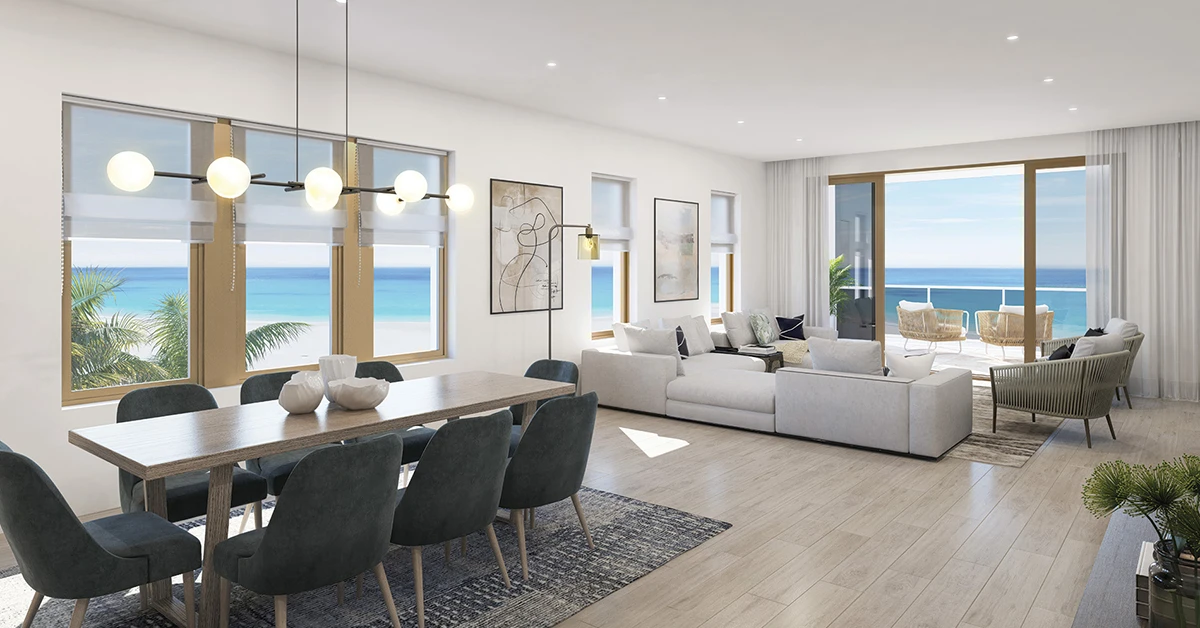
The project consists of 44 residences, each designed with full-scale living in mind. Floorplans range from approximately 2,800 to over 3,900 square feet, with penthouses exceeding 6,000 square feet. This is not resort inventory. It is residential product directly on Satellite Beach.
Equally important is the site itself. The property’s adjacency to protected land and environmental preserve ensures that ocean views remain permanently unobstructed. That is not a marketing feature. It is a land-use condition that cannot be replicated once lost.
In coastal real estate, scarcity is not created by branding. It is created by constraints. This is one of them.
In more mature markets, pricing reflects demand. In emerging markets, pricing trails it. The Space Coast remains in that second category. Oceanfront property here is still trading at a level that does not fully reflect the strength of its underlying economic base. This is not due to a lack of quality or location. It is due to perception and timing.
For an investor, that distinction matters. You are not buying based on what the market believes today. You are buying based on where the market is moving over the next five to ten years.
A Structured Entry Point, Not a Standard Purchase
The current phase of Lumena is not positioned as general availability.
There are eight remaining founding opportunities, tied directly to the project’s progression into construction. This phase includes a structured financial position for early buyers, where invested capital is returned at closing while maintaining full participation in future market appreciation.
This is not typical of condominium development.
Adam Facciobene, developer of Lumena, describes the current phase as a transition point rather than a marketing moment. “This is the stage where a project moves from concept into execution. The buyers who come in now are establishing position before construction begins and before the market has fully adjusted. Once we move forward, that opportunity changes.”
It is a deliberate structure designed to align early buyers with the project at a favorable entry point. The specifics are not broadly published, but the implication is clear: this is a defined window, not a standing offer.
Why End-User Demand Matters to the Investor
A common failure point in real estate investing is overestimating investor demand and underestimating end-user demand. Assets appreciate most effectively when they are ultimately absorbed by buyers who intend to use them.
Lumena has been designed with that in mind. The scale of the residences, the privacy of a 44-unit building, and the residential character of Satellite Beach all point toward a buyer who is not transient. This is a market defined by stability, not turnover.
For the investor, that matters. It means the asset is not dependent on speculation alone. It is supported by a future buyer pool that values the product for what it is, not just what it represents financially.
A Defined Window Before the Market Reprices
Timing is often discussed in general terms. Here, it is specific. The developer has established a 60-day window to secure the remaining founding positions before moving forward with construction. Once that milestone is reached, both pricing and structure are expected to change.
Jamie Dandridge, Development Sales Specialist with One Sotheby’s Realty, adds, “In more established coastal markets, buyers are competing within a fully priced environment. Along the Space Coast, we’re still in a position where oceanfront ownership is available at a basis that doesn’t yet reflect the region’s economic trajectory. That’s a very specific window, and it doesn’t stay open indefinitely.”
This is the transition point where a project moves from opportunity to execution. In most cases, by the time a market fully recognizes value, the most favorable entry positions are already gone. The current phase exists just before that shift.
Access Is Limited, and Intentional
Opportunities like this are not widely broadcast because they are not intended for broad consumption. They are designed for buyers who understand how to evaluate timing, supply constraints, and market trajectory, and who are prepared to act within a defined window.
For investors evaluating where to establish position, Lumena represents a clear proposition: oceanfront ownership in a market that is still in the process of being repriced. Private consultations with the developer are currently being scheduled through One Sotheby’s Realty. To connect with the sales team, contact Stephanie Moss Dandridge, Director of Sales, at 321.243.1218, or Jamie Dandridge, Development Sales Specialist, at 321.258.1477 to discuss securing one of the remaining founding positions.
There are moments when a place stops being something you hear about and becomes somewhere people start showing up for.
Florida’s Space Coast is in the middle of that shift. What was once a more understated stretch of the Atlantic coastline, east of Orlando along the barrier island communities of Brevard County, is beginning to take on a different kind of presence.
It is visible in the sky, where rocket launches have moved from occasional events to part of everyday life in the region. It is just as visible on the ground, in the movement of people, the expansion of industry, and the growing sense that this is no longer just a place to visit, but a place to establish something more permanent.
The Space Coast is not simply experiencing growth. It is entering a period where energy, lifestyle, and long-term momentum are aligning. For those paying attention, that alignment is what makes this moment different.
Launch Activity Is Reshaping the Energy of the Space Coast
On certain mornings or late evenings, that shift is unmistakable. A rocket lifts off just beyond the horizon, visible from beaches, rooftops, neighborhoods, and causeways along the coastline. What was once an occasional event has become part of everyday life, something residents step outside to experience in real time.
Both the frequency and scale of launches have increased, and with that, the meaning of each one has changed.
These launches are not isolated moments. They reflect a broader expansion taking place across the Space Coast. Behind each launch is an evolving network of aerospace companies, engineers, infrastructure, and long-term investment that is reshaping the region.
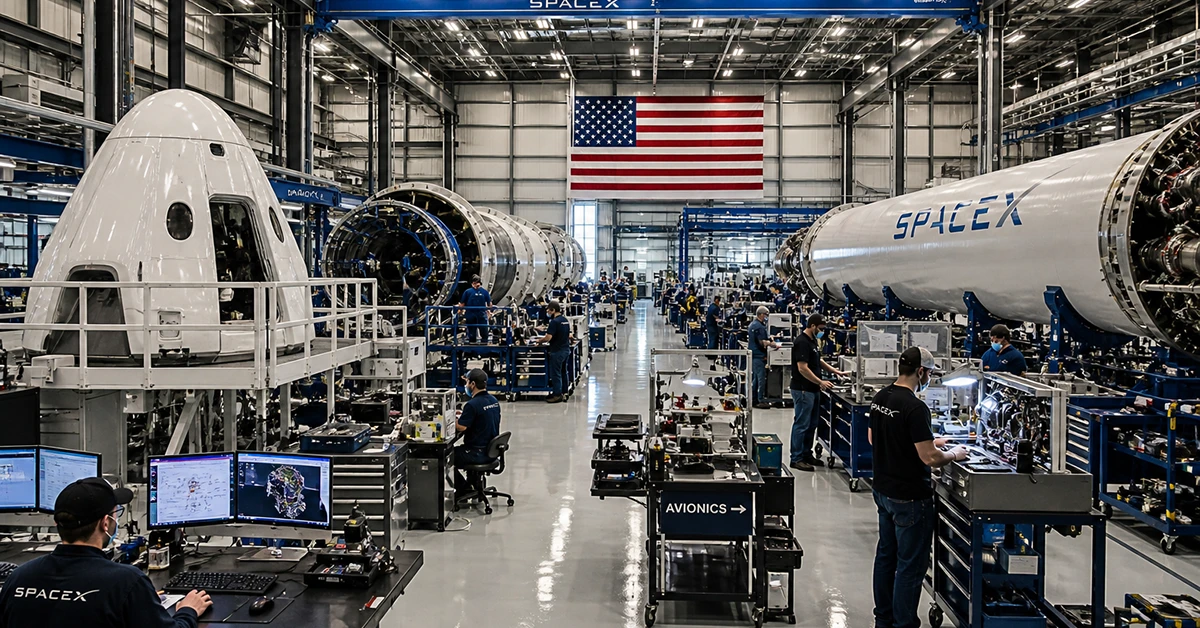
That activity is translating into movement on the ground. New employers are establishing a presence. Professionals are relocating to be closer to where that work is happening. Supporting industries are growing alongside it. The result is a region increasingly defined by sustained economic and professional activity, not launch activity alone.
For many, that shift is changing how the Space Coast is perceived. It is no longer just a place people come to watch something happen. It is becoming a place people choose to live because of what is happening.
A Lifestyle That Extends Beyond the Moment
People are drawn to the Space Coast because it is not limited to what is happening in the sky or within its industries. It is the way the region supports how people want to live once they are here.
In barrier island communities like Satellite Beach, daily life feels distinctly coastal and residential. The coastline is open and accessible, the beaches are part of everyday routines, and the environment supports year-round activity, from water sports and fitness to schools, parks, dining, and community life.
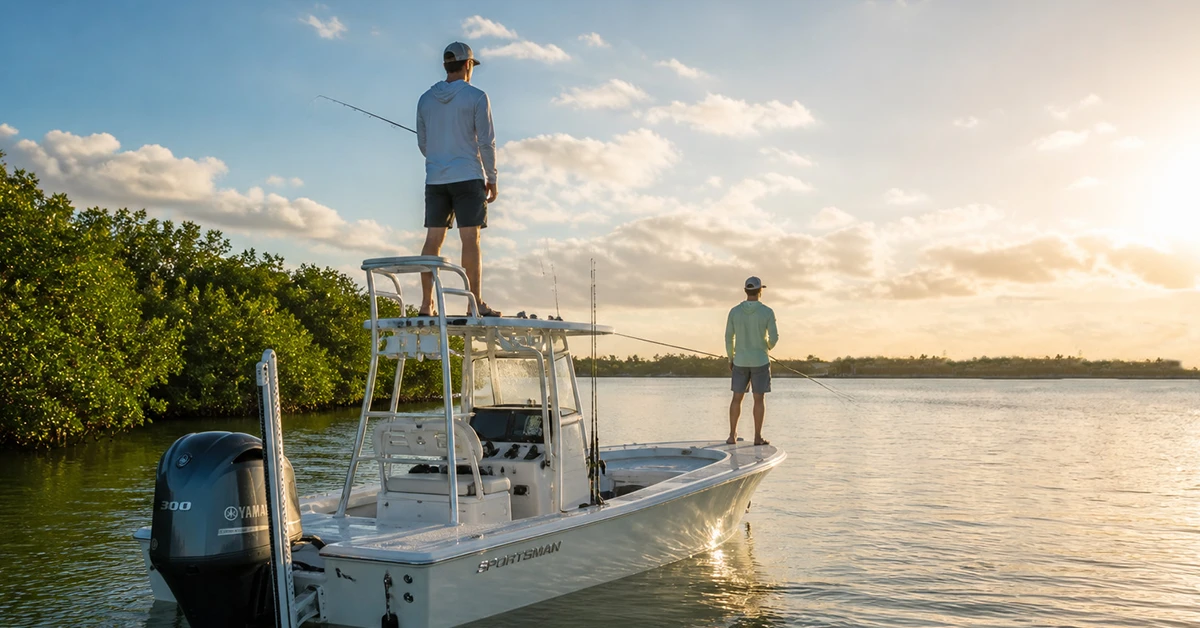
Residents move easily between the Atlantic Ocean and the Indian River Lagoon, with boating, paddle sports, and outdoor recreation built into daily living. The area is supported by established schools, healthcare access, and a growing mix of local dining and retail that continues to expand alongside the population.
For professionals and families relocating to the region, that balance is what stands out. The Space Coast offers proximity to Orlando, one of the most globally connected destinations in the country, while maintaining a residential character that feels grounded and livable.
It is not defined by short-term activity or seasonal traffic. It is defined by how consistently it supports daily life, which is why more people are choosing to make it home.
A Florida Coast That Still Feels Open
The Space Coast still offers something that has become difficult to find along much of Florida’s coastline.
There are long stretches of beachfront that remain unobstructed. Views are not defined by rows of high-rise buildings. In many areas, protected land, public access, and environmental preservation have limited how the shoreline has been developed, allowing the ocean to remain the focal point.
Communities like Satellite Beach reflect that difference. The scale is lower, the density is controlled, and the experience of being on the coast feels more connected to the environment itself. There is space to walk the beach without interruption, to see the horizon without obstruction, and to experience the coastline without the congestion that defines more built-out markets.
That balance between preservation and growth is not accidental. It is part of what makes the remaining opportunities along the Space Coast so limited. In select locations, there is still room for thoughtful new development that respects the character of the coastline while allowing more people to experience it.
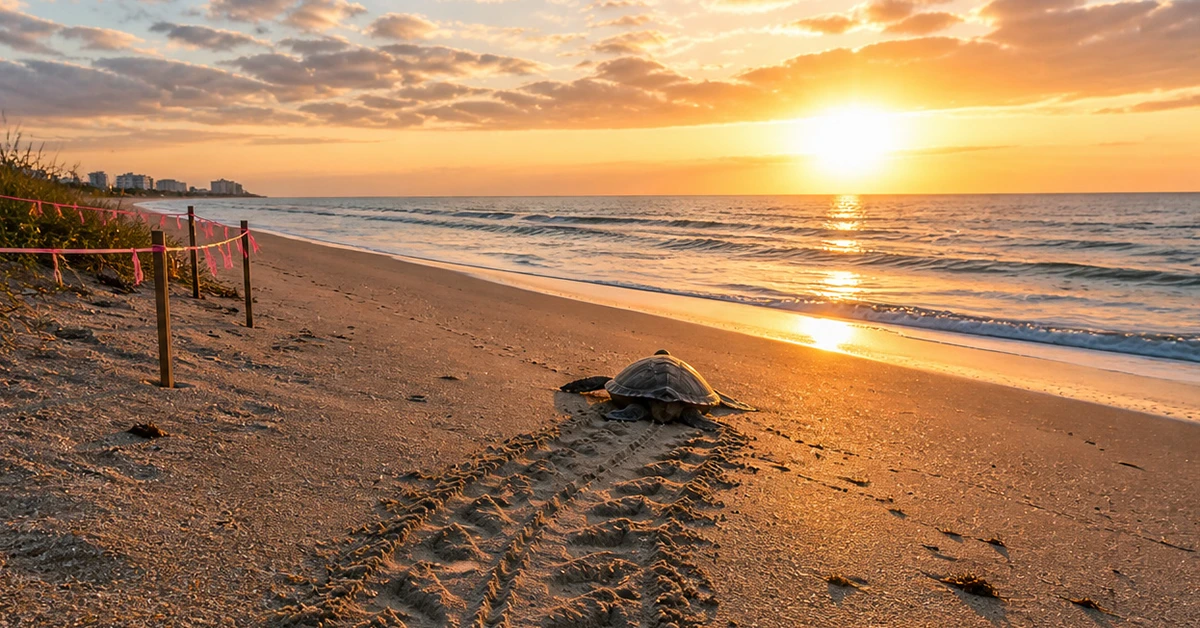
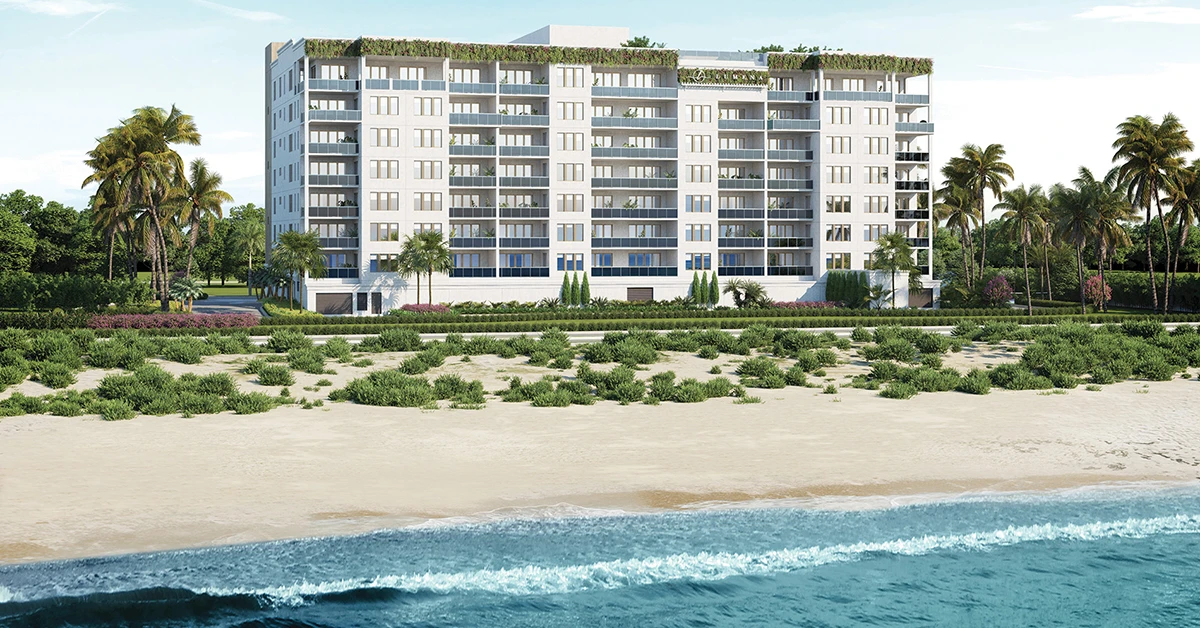
Lumena, a new mid-rise oceanfront community planned along A1A in Satellite Beach, is positioned within one of those rare conditions. Located across from a protected turtle nesting preserve and adjacent to publicly held land, the site maintains the openness of the shoreline while introducing new construction designed to take advantage of unobstructed ocean views. The approach is intentionally measured, allowing modern residences to be introduced without changing the fundamental experience of the coast itself.
Brought to Life by Those Who Know the Coast
The introduction of new oceanfront construction along this stretch of the coastline carries weight, particularly in a place like Satellite Beach where development has remained measured over time.
Lumena is being brought forward by an ownership group with long-standing ties to the Space Coast, led by Adam Facciobene. Their perspective is shaped by years of direct experience with how the area has evolved and what makes it distinct.
“We’ve watched this area evolve over time,” Facciobene says. “What’s happening now isn’t surprising to us, but it’s different in scale. More people are starting to see what’s always been here.”
That familiarity informs the approach. The intent is not to introduce something that competes with the character of the coastline, but to create a residential experience that reflects it. For Satellite Beach, where new construction opportunities are limited, that distinction matters.
What oceanfront properties are available on Florida’s Space Coast?
For those exploring what oceanfront properties are available along Florida’s Space Coast, new construction opportunities at this scale are increasingly rare.
Global Attention Is Turning Toward the Space Coast
The shift taking place along the Space Coast is not going unnoticed beyond the region.
Capital activity across aerospace, infrastructure, and supporting industries continues to expand, drawing attention from firms and institutions operating at a national and global level. What was once considered a secondary coastal market is now being evaluated within a broader context tied to long-term economic growth.
That interest spans multiple sectors, including technology, manufacturing, logistics, and development, each contributing to a more diversified and stable economic base. As that foundation strengthens, the Space Coast is moving onto the radar of groups that historically focused on more established markets.
For those observing the region, this level of engagement reflects a growing recognition that the Space Coast is evolving with underlying drivers that extend beyond short-term cycles.
A New Oceanfront Opportunity Emerges Along the Space Coast
As the Space Coast continues to evolve, opportunities to introduce new oceanfront residential development remain limited. Lumena introduces a new oceanfront residential offering at a point when supply remains constrained.
New construction opportunities at this scale on Florida’s Atlantic Coast are increasingly rare.
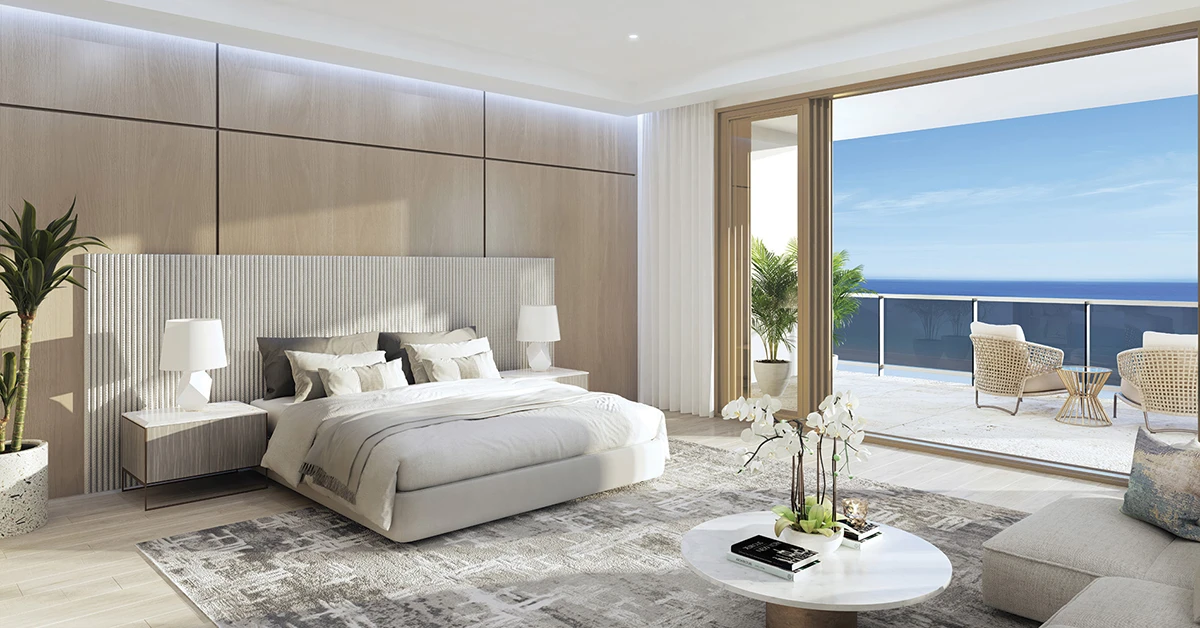
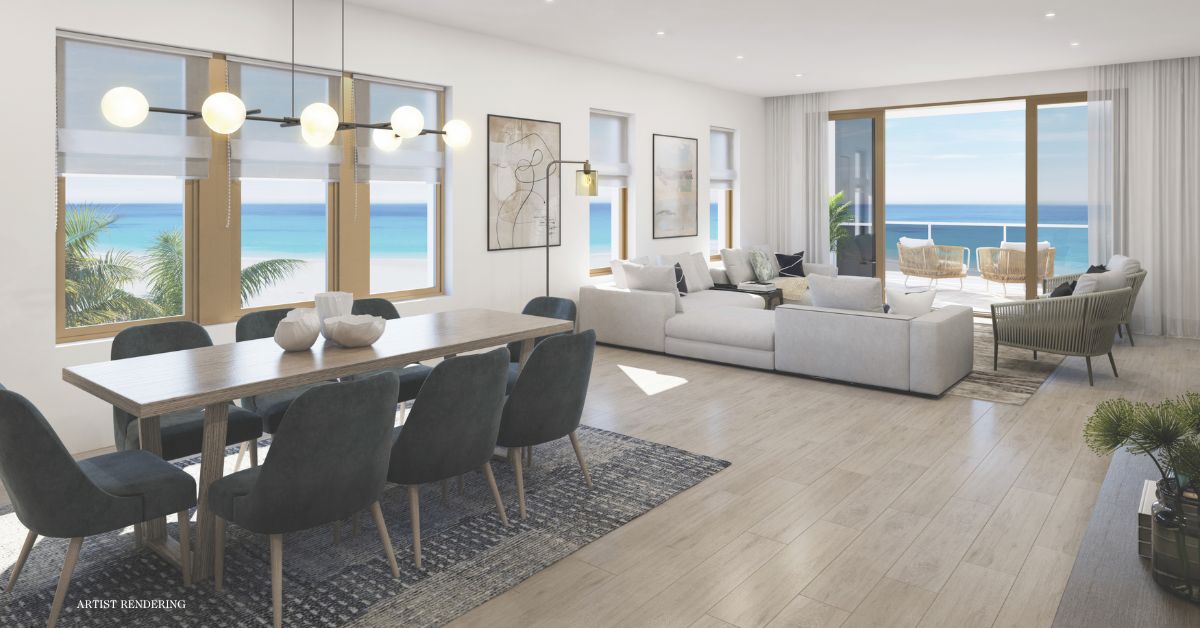
The building will include a limited collection of 44 ocean view residences, with floorplans that prioritize interior space, outdoor living, and direct orientation toward the Atlantic. Residences are notably large for new oceanfront construction, ranging from approximately 2,800 to over 3,900 square feet, with penthouse offerings extending beyond 6,000 square feet. Large-format layouts, expansive terraces, and floor-to-ceiling glass are designed to keep the Atlantic in view throughout daily living.
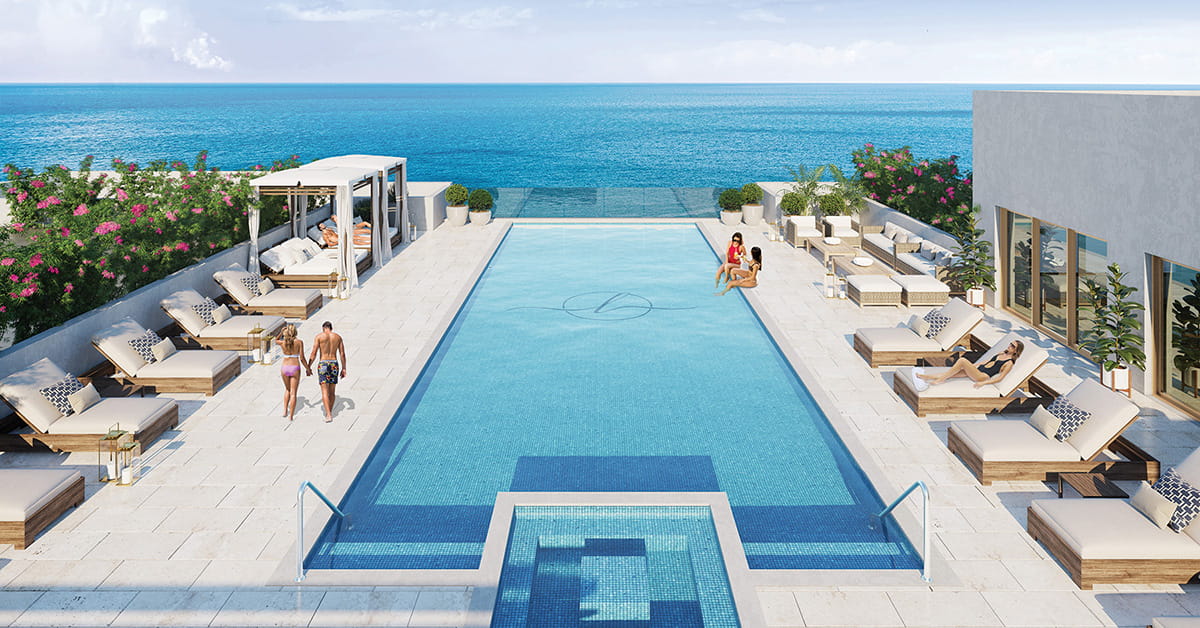
The approach to design reflects a residential focus rather than a resort environment. Amenities are concentrated and intentional, including a rooftop level with an ocean-facing pool, fitness center, and wellness components, along with additional gathering spaces that support both full-time and seasonal living. At the ground level, the amenity experience includes a pickleball court, open green space, and a designated dog walk area.
According to Stephanie Moss Dandridge of One Sotheby’s International Realty, who is leading sales for the project, the introduction of new construction at this scale is significant within the local market.
“There are very few opportunities to acquire new oceanfront residences of this size and quality along the Space Coast,” she notes. “What makes Lumena distinct is not just the product itself, but how it aligns with the character of the area and the direction the region is moving.”
A Limited Founding Opportunity
The current release at Lumena is structured differently from a typical new development.
A limited number of founding residences remain, tied directly to the final phase required to initiate construction. Within this structure, early purchasers participate in a defined program in which capital is returned at closing, allowing buyers to secure their position within the project as the building moves toward construction.
This is not an ongoing offering. It is a condition specific to this stage of the project and will not extend beyond the initial group of residences required to reach the construction threshold.
For those following the progression of the Space Coast, this timing is meaningful. The region is gaining visibility, the underlying drivers are in place, and availability at this stage remains limited.
Details on the current availability and structure can be found at lumenafl.cottonsolution.com, or by speaking directly with Stephanie Moss Dandridge of One Sotheby’s International Realty at 321.243.1218.
High-performance individuals are choosing Florida’s Space Coast. For most people, choosing where to live is about proximity. For others, it is about separation.
Trey Hendrickson, an NFL pro-bowler whose career is built around constant travel, performance, and pressure, could choose to live anywhere. Instead, his attention turned to Satellite Beach, part of Florida’s Space Coast, located east of Orlando along the Atlantic coastline.
That decision is not isolated. A broader group of executives and professionals are beginning to look beyond Florida’s most established coastal markets and toward places that offer a different kind of environment. The question is why.
1. Privacy without isolation along Florida’s Atlantic coastline
Satellite Beach offers a level of privacy that is increasingly difficult to find in coastal Florida. The area is residential, not transient, and the shoreline is not defined by constant turnover. For someone whose professional life is public, that distinction matters. It creates distance without disconnecting from the outside world.
2. True oceanfront access, not partially obstructed waterfront living
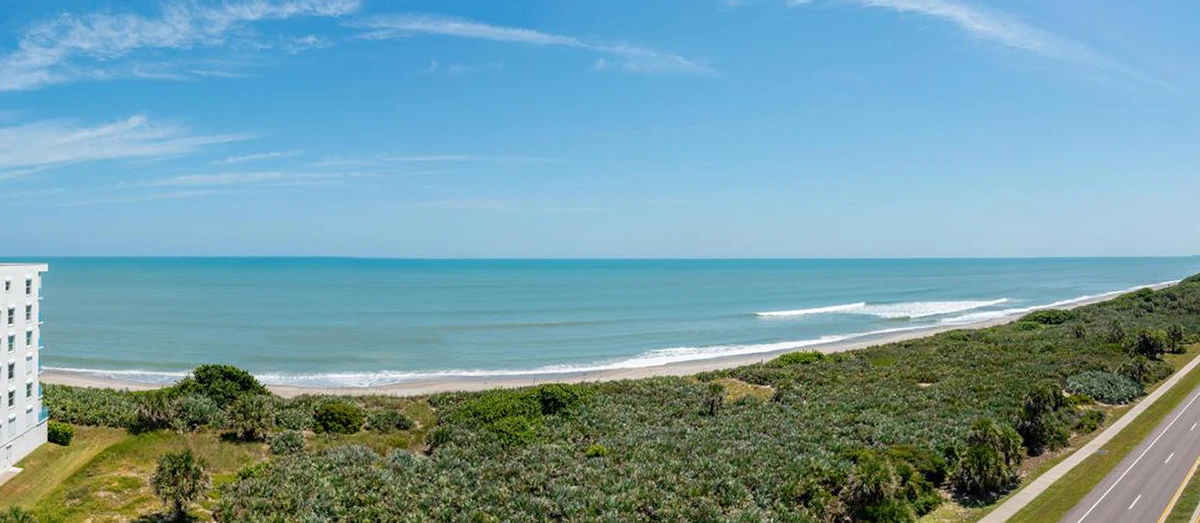
The Atlantic Ocean is immediate here. There is no separation created by commercial development or overbuilt infrastructure. Protected land, including Hightower Beach Park and surrounding conservation areas, ensures that the coastline remains open and unobstructed. This is not a temporary condition. It is built into how the area is structured.
3. A quieter alternative to Florida’s high-density beach markets
Many of Florida’s best-known coastal destinations are defined by energy and volume. Satellite Beach operates differently. It is consistent, measured, and stable throughout the year. There is no reliance on seasonal traffic or tourism cycles. For buyers seeking a place to step away from constant activity, that difference becomes a primary driver.
4. Access to Orlando’s global connectivity without daily exposure to it
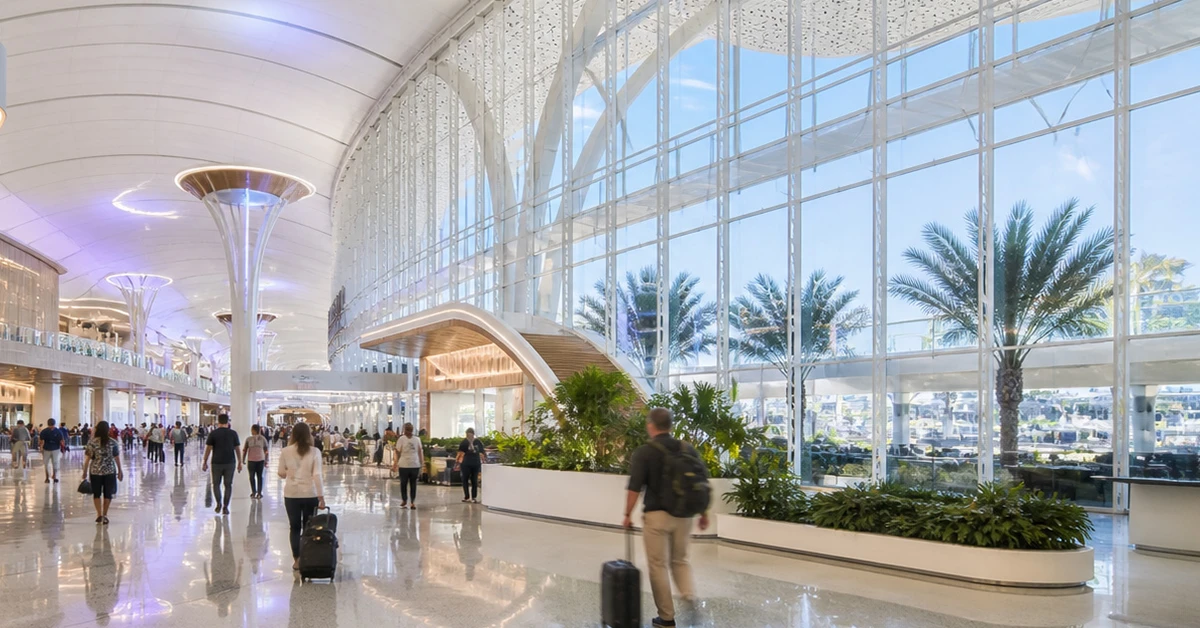
Satellite Beach sits within reach of Orlando International Airport, one of the most connected travel hubs in the country. For individuals who travel frequently, this proximity provides access when needed, without requiring them to live within a high-density urban environment. The ability to move easily while maintaining separation is a key part of the appeal.
5. A setting shaped by both natural environment and forward growth
The Space Coast is defined by two forces operating at the same time. On one side, the Atlantic Ocean, protected shoreline, and surrounding ecosystems establish a stable, natural environment. On the other, continued expansion in aerospace and technology is bringing new capital and long-term economic growth into the region.
That combination creates a setting that feels grounded, but not stagnant.
6. A market that remains early relative to its trajectory
Unlike South Florida or the Gulf Coast, the Space Coast has not fully adjusted to its growth. This creates a condition where buyers are evaluating the market not based on what it has been, but on where it is moving.
As Stephanie Moss Dandridge of One Sotheby’s International Realty notes: “We’re seeing buyers who are looking for space, privacy, and a different type of coastal experience. They are recognizing that this area offers that in a way other markets no longer do.”
This is less about discovery and more about recognition.
7. A place designed for enjoying the outdoors, not visibility
Many coastal markets are structured around perception. Satellite Beach is not. The focus here is on how the environment functions on a daily basis. The experience is not driven by status or attention, but by consistency and livability. For buyers who have already experienced more congested or over-built markets, that difference is measurable.
8. The global appeal of Florida’s Space Coast
Satellite Beach is part of a broader region that is gaining attention, but it maintains a level of control and limited scale that separates it from surrounding areas. It is a barrier island community with constrained development, direct ocean access, and proximity to a growing economic corridor.
Within the Space Coast, it represents one of the most stable and limited coastal environments available.

A Different Kind of Decision
For someone like Trey Hendrickson, the decision is not based on where he has to be. It is based on where he chooses to spend his time when he does not. That same evaluation is beginning to appear across a wider group of buyers.
The shift is subtle, but it is happening. And it is changing how people think about this part of Florida’s coastline. For those beginning to look beyond Florida’s most familiar coastal markets, the Space Coast presents a different set of conditions. Less density. More space. Greater consistency. It is not the obvious choice. That is precisely why it is becoming one.
A Founding Opportunity for Early Buyers
Set along this stretch of coastline, Lumena is a boutique collection of just 44 oceanfront residences. As the project moves toward its next phase, the developer is offering a very limited opportunity for the final founding owners, including a structured return of capital at closing, effectively removing upfront risk while allowing buyers to participate in future appreciation. For those looking to align with this early momentum, Lumena offers a rare entry point. Details on current availability and structure can be found at lumenafl.cottonsolution.com, or by speaking directly with Stephanie Moss Dandridge of One Sotheby’s International Realty at 321.243.1218.
What Makes the Best Florida Oceanfront Real Estate Different?
For buyers searching for Florida oceanfront real estate that offers long-term value, not all properties are created equal.
There is a meaningful difference between access to the ocean and ownership of a position that cannot be replicated. That distinction is what separates commodity coastal property from assets that hold long-term value.
Along Florida’s Space Coast, located east of Orlando including the Atlantic barrier island, that difference becomes clear at Lumena.
An Address Defined by What Cannot Be Built Again
Irreplaceability in real estate is not a marketing concept. It is a function of constraints: land use, environmental protection, and the realities of what can and cannot be developed over time.
Located in Satellite Beach along Florida’s barrier island corridor, Lumena is positioned directly along the Atlantic Ocean, with its eastern frontage defined not by future development, but by protected land and environmental preserve. This condition ensures that the ocean views from the property remain permanently unobstructed.
In coastal markets across Florida, that level of certainty is increasingly rare. Once view corridors are lost to new construction, they do not return. Here, they are structurally protected.
Boutique Scale in a Supply-Constrained Market
The building itself reinforces that scarcity. With only 44 residences, Lumena operates at a scale that is materially smaller than most new coastal developments. This is not a high-density tower designed for turnover. It is a controlled residential environment where ownership remains limited by design.
That limitation matters over time. In larger developments, inventory can re-enter the market frequently, creating internal competition. In a boutique property, availability is inherently constrained. Fewer residences mean fewer opportunities to acquire one in the future.
Scarcity is not a feature added later. It is built into the structure from the beginning.
Designed for Living, Not Transience
The distinction between a residential property and a resort-oriented product is often overlooked, but it is critical.
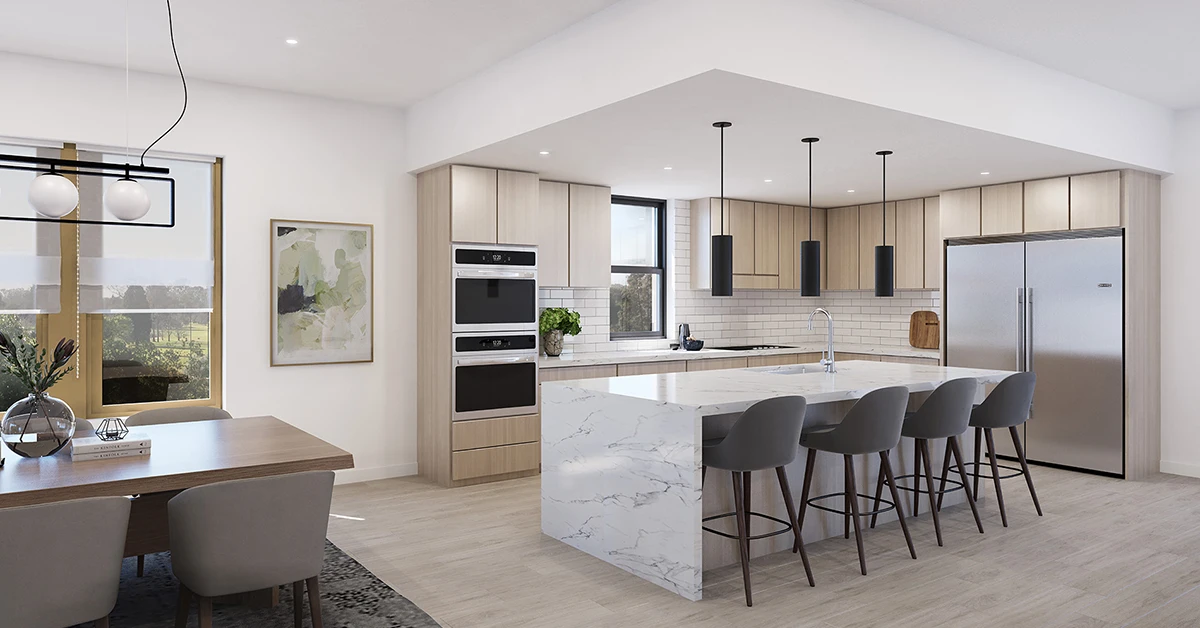
Lumena’s residences are designed for full-time living. Floorplans range from approximately 2,800 to over 3,900 square feet, with expansive terraces that extend the living space outward. The layouts prioritize scale, privacy, and continuity between interior and exterior environments.
This is not a product intended for short-term use or seasonal turnover. It is built for owners who expect to live within the space, not simply visit it. That design decision influences everything that follows, including who ultimately chooses to own within the building.
A Space Coast Oceanfront Property Supported by Long-Term Demand
Location is often reduced to proximity: what is nearby, what is accessible. What matters more is how a place functions over time.
Satellite Beach operates differently than many Florida coastal markets. It is not built around tourism or short-term rental activity. It is a residential barrier island community, defined by lower density, limited overdevelopment, and a consistent year-round population.
That stability creates a different ownership experience. For future buyers, the appeal is not based on novelty. It is based on consistency: access to the ocean without congestion, a quieter environment, and a sense that the character of the area is not subject to rapid change.
This is the type of setting that supports long-term value because it continues to meet the expectations of the next buyer, not just the current one. This distinction is what continues to separate high-quality Space Coast oceanfront property from more transient coastal inventory across Florida.
Aligned With a Region Driving Demand for Florida Oceanfront Real Estate
While the immediate environment remains controlled, the broader region continues to evolve.
The Space Coast has become a center of activity for private aerospace, advanced manufacturing, and supporting technology industries. This has introduced sustained capital investment and a growing base of high-income professionals relocating into the area.
The Economic Development Commission of Florida’s Space Coast notes that the region has evolved into one of the nation’s leading hubs for commercial space activity, with sustained expansion expected across multiple sectors, reinforcing the long-term trajectory of the region.
This combination of localized stability with regional growth is not common. It allows the property itself to remain consistent while the surrounding market strengthens.
Irreplaceability as a Function of Timing
Assets like this are not created in response to demand. They exist because the conditions to build them were available at a specific moment. That moment does not repeat easily.
Oceanfront land becomes constrained. Environmental protections increase. Development standards shift. What can be delivered today may not be possible tomorrow.
At Lumena, the result is a property that sits at the intersection of those constraints: direct ocean exposure, protected views, limited density, and a residential scale that is increasingly difficult to replicate.
A Finite Opportunity Within a Finite Asset
Within that context, the current opportunity is narrowly defined. Only eight founding residences remain available as the project moves toward construction. This is not a broad release of inventory. It is the final phase of early ownership within a building that is limited by design.
Once these positions are secured, the opportunity does not expand. It contracts.
Securing Position in Florida Oceanfront Real Estate That Cannot Be Recreated
For buyers evaluating Florida oceanfront real estate, the question is not where to purchase, but what is being secured.
Lumena represents a rare condition where the physical attributes of the property, the constraints of the site, and the trajectory of the Space Coast align. The result is not just oceanfront ownership, but ownership within a setting that is unlikely to be duplicated in the future.
Private consultations are currently being scheduled through Sotheby’s Realty. To connect with the sales team, contact Stephanie Moss Dandridge, Director of Sales, at 321.243.1218, or Jamie Dandridge, Development Sales Specialist, at 321.258.1477 to discuss securing one of the remaining founding positions.
As seen on Space.com
Blue Origin’s huge New Glenn rocket won’t debut next month after all.
New Glenn, the company’s partially reusable new heavy lifter, had been scheduled to launch NASA’s twin ESCAPADE Mars probes from Cape Canaveral Space Force Station in Florida during an eight-day window that opens on Oct. 13. But that’s no longer the plan.
“The agency’s decision to stand down was based on a review of launch preparations and discussions with Blue Origin, the Federal Aviation Administration and Space Launch Delta 45 Range Safety Organization, as well as NASA’s Launch Services Program and Science Mission Directorate,” NASA officials wrote in an update today (Sept. 6).
“The decision was made to avoid significant cost, schedule and technical challenges associated with potentially removing fuel from the spacecraft in the event of a launch delay, which could be caused by a number of factors,” they added.
NASA and Blue Origin are discussing new liftoff dates for ESCAPADE, with the earliest possible option now falling in spring of 2025, according to the update. That seems puzzlingly soon, given that launch windows for Mars missions come along just once every 26 months. (That’s the interval on which Earth and the Red Planet align to allow efficient deep-space travel.)
To read the full article, click here.
As seen in Space Explored
NASA’s Europa Clipper mission, set to launch in October, is designed to investigate Jupiter’s moon Europa and its potential to harbor life. Europa is of particular interest to scientists because beneath its thick ice shell lies a massive saltwater ocean, which could contain the necessary ingredients for life: water, chemical elements, and energy sources.
The Europa Clipper spacecraft was built at NASA’s Jet Propulsion Laboratory in Southern California, with contributions from several international and domestic partners. The vehicle’s propulsion system, which holds 24 engines and nearly 6,000 pounds of fuel, was developed to allow the mission to perform its extensive flybys of Europa . Its power system relies on large solar arrays, each over 46 feet long, to collect sunlight during its long journey to Jupiter. Moreover, the spacecraft is designed to withstand the intense radiation in Jupiter’s environment, with its sensitive electronics encased in a specially designed radiation vault.
Europa Clipper is currently in its final preparations at NASA’s Kennedy Space Center in Florida. Recently, technicians attached the spacecraft’s massive solar arrays, and further tests are being conducted to ensure its readiness for launch atop a SpaceX Falcon Heavy as early as October 10. Once in space, the robotic explorer is expected to take six years to reach Jupiter, using gravity assists from Mars and Earth to arrive in 2030.
To read the full article, click here.
As seen in Space Coast Daily
Teams with NASA and Boeing loaded the core stage boat-tail for Artemis III and the core stage engine section for Artemis IV onto the agency’s Pegasus barge at Michoud Assembly Facility in New Orleans on Aug. 28.
The core stage hardware joins the launch vehicle stage adapter for Artemis II, which was moved onto the barge at NASA’s Marshall Space Flight Center in Huntsville, Alabama, on Aug. 21. Pegasus will ferry the multi-mission rocket hardware more than 900 miles to the Space Coast of Florida.
Teams with the NASA’s Exploration Ground Systems Program will prepare the launch vehicle stage adapter for Artemis II stacking operations inside the Vehicle Assembly Building, while the core stage hardware will be moved to Kennedy’s Space Systems Processing Facility for outfitting.
To read the full article, click here.
As Seen in CBS News
Caroline Marks from the United States won the women’s surfing gold medal while French Polynesian Kauli Vaast won the gold medal in men’s surfing on Monday at the Paris Olympics in Tahiti.
Cheers and tears erupted from boats floating near the wave and crowds of spectators along the shore as the men’s final match ended in the afternoon. Vaast pumped his arms into the air in victory after beating Jack Robinson from Australia, who received the silver medal.
“I don’t really realize it, but I just made history,” said Vaast. “I can’t be prouder to represent Tahiti and France at home.”
The women’s gold medal match ended about 30 minutes later, with Marks beating Tatiana Weston-Webb from Brazil, who was awarded the silver medal.

“Your whole life goes into a moment like this,” Marks said with a gold medal hanging around her neck. “It’s beyond all my wildest dreams.”
To read the full article, click here.
As Seen in Spectrum News
CAPE CANAVERAL SPACE FORCE STATION — The Artemis II rocket’s core stage that will help carry four astronauts to orbit the moon — the first time in more than 50 years humans visited Earth’s lunar sister — arrived at NASA’s Kennedy Space Center on Tuesday.
The fully assembled 212-foot-tall Space Launch System (SLS) rocket took about a 900-mile ferry ride from NASA’s Michoud Assembly Facility in New Orleans (where it was built) via the Pegasus barge on Tuesday, July 16.
On Wednesday, the rocket core stage was removed from the barge and moved into Kennedy Space Center’s Vehicle Assembly Building, a more than three-hour trek just to go a little less than half a mile.
At some point, while the core stage is all nestled in the Vehicle Assembly Building and being reviewed by engineers, the two solid rocket boosters and the Orion spacecraft will be attached to the massive rocket.
Matt Ramsey, Artemis II mission manager, said it was “shocking” and “fantastic” to witness the core stage being pulled out of the barge. He shared with Spectrum News the gambit the core stage will go through while it is in the Vehicle Assembly Building.
The Artemis II mission is scheduled to take off in September 2025, sending a crew of four people to orbit the moon.
It was originally set to launch later this year, but in January 2024, NASA officials announced that the mission would be pushed back because of safety reasons, such as an issue with the heat shield.
To read the full article, click here.
As Seen In The Community Paper
Summer is here, and what better way to celebrate than heading over to Orlando’s closest beach — Cocoa Beach! Just a 45-minute drive from Orlando, visitors can not only catch a wave along the Atlantic Coast but also watch rockets launch from nearby Kennedy Space Center as well as enjoy exploring over 20,000 acres of freshwater rivers and the Indian River Lagoon.
In addition to these sights and attractions, the area is also home to eight local craft breweries and five historic downtown districts with shopping, dining and entertainment. Here are a few food highlights for your next trip to Florida’s Space Coast.
Third Culture Kitchen opened in 2018 with the goal of bringing together multiple cultures and food traditions similar to the way the revitalization of the space program unified people from all over the world in this small town on the Space Coast. Menu highlights include their Creamy Spicy Coconut Shrimp Bowl, Asian chicken wings and steamed bao buns. They also have an extensive vegan menu including Bravas Yucca, tossed in a spicy garlic miso sauce; Spicy Pineapple Paow & Broccoli with stir-fried rice noodles; and the Paow Burrito in a 13-inch tortilla with Paow steak, house-made black beans, jasmine rice, roasted corn, tomatoes, salsa, and vegan cheese.

The concept behind Vine & Olive came out of the desire to have a modern Italian restaurant not just to meet for a glass of wine after work at the bar or casual dinner but also for celebrations. If you time your visit right, you could watch a rocket launch from Kennedy Space Center right outside their windows facing the ocean. The bar features 24 draft wines and a creative cocktail menu, while the scratch kitchen employs a wood-fired grill to create modern Italian dishes with ingredients from local producers such as Quincey Cattle Company, Victory Garden Greens, Seafood Connections and Orlando-based Trevi Pasta company. Featured dishes include Lobster Burrata Ravioli, 100 Layer Lasagna, and their Vegan Carrot Cake.
Open since 1996, Sunrise Bread Company specializes in baking specialty and whole-grain breads, cinnamon rolls, scones, muffins and cookies. Their cafe features Batdorf & Bronson coffee with espresso brewed on a La Marzocco espresso machine. For families with little ones, there is a “secret” hidden kids’ play area located under the stairs with games and toys — a perfect place for them to enjoy some time playing while the parents enjoy their coffee. Upstairs, there is ample seating and Wi-Fi for those looking for a place to meet or work while enjoying their baked goods.
Q’s Crackin’ Crab & Seafood Kitchen opened up their dream spot in world-famous Cocoa Beach, Florida, in the middle of the pandemic in 2020, but they’ve have found great success with their delicious crab cluster platters, rib-eye bowls, garlic-infused lobster and more.